Neck pain has a way of stealing focus from your day. You start by tugging at your collar, then shifting in your chair, then losing the thread of a conversation because your cervical spine refuses to cooperate. I’ve worked with office workers, dental hygienists, mechanics, and one very patient violinist, and the through-line is the same: when the neck locks down, everything upstream and downstream starts to compensate. Manual manipulation and mobilization can help, but they work best as part of a coordinated plan that includes smart movement, postural retraining, and small daily habits that add up.
This is a tour from evaluation to hands-on care to home exercise planning, with detours through ergonomics, pain management, and those maddening muscle knots that always seem to reappear. My goal is to explain how physical therapy for neck pain actually works, what to expect in the clinic, and what you can do at home to protect the cervical spine without falling into the trap of stretching the same tight spot forever.
Why the cervical spine misbehaves
The neck is a busy corridor. Seven vertebrae, dozens of muscles and fascia layers, discs, facet joints, ligaments, and nerve roots all share tight quarters. It carries the weight of a bowling ball sized head, usually held slightly forward of the shoulders. That small forward drift isn’t benign. Even a 2 to 3 centimeter forward head posture can increase the effective load on the neck by several kilograms, which explains why long laptop sessions feel like a workout you never meant to do.
Common causes of neck pain include whiplash after a car accident, long-term poor posture that loads the joints and stresses soft tissue, and a herniated disc that irritates a nerve root. Not every stiff neck comes from one of those big three. Sometimes it’s cumulative microstress: phone scrolling with the chin tucked for hours, sleeping on a high pillow that keeps the neck cranked to one side, or gripping the jaw when work gets hectic. Muscle tension and myofascial trigger points love those conditions.
The good news is that the neck responds to the right kind of input. Joint mobilization restores glide and roll in the facet joints. Myofascial release calms guarding. Targeted strengthening builds capacity so you don’t collapse back into the same pattern. Posture alignment, in this context, isn’t about pin-straight military posture, but about giving the head and shoulders a neutral, sustainable home base so the neck can breathe.
What a thorough physical therapy evaluation looks like
The first visit sets the tone. A proper physical therapy evaluation for cervical spine issues should feel like an investigation, not a rush to massage the sore spot. I always ask about aggravating and easing factors, any numbness or tingling in the arm or fingers, headaches, night pain, and red flags such as recent trauma with significant loss of motion, fever, or unexplained weight loss. If you’re searching “neck pain physical therapy near me,” expect the clinician to spend real time in this discovery phase rather than jumping straight into machines or generic exercises.
Assessment includes active and passive range of motion. Limited rotation to one side often hints at facet joint restriction, while painful end-range flexion might suggest disc involvement. Palpation helps identify trigger points in the upper trapezius, levator scapulae, suboccipitals, and scalenes, and you’ll usually feel a familiar zinger when the therapist lands on the right spot. Neurological screening checks reflexes, dermatomes, and strength to spot nerve root irritation. I like to watch posture dynamically, not just in standing. How you sit, reach, and turn to talk tells me more than a snapshot.
From there, we test movement patterns. If your thoracic spine barely moves, your cervical segments are doing extra work every time you look over your shoulder. If your shoulder blade rides up with every arm motion, the neck is quietly clenching to stabilize. The plan grows from these patterns. Cervical spine physical therapy isn’t just neck work, it’s regional.
Manual manipulation and mobilization, in plain terms
People use the word manipulation to mean different things. In physical therapy, manipulation is a quick, precise thrust applied to a joint to restore motion. You might hear a pop, which is just cavitation of joint gas, not bones grinding. Mobilization is slower and graded, using oscillations or sustained holds without thrust. Both aim to improve joint mechanics and reduce pain. Used judiciously, they can make a stiff neck move like it should.
Manual therapy for neck stiffness often targets the facet joints at C2 to C7, the upper cervical segments for headaches and rotation, and the cervicothoracic junction where the neck meets the upper back. When a segment isn’t gliding, it forces the neighbor segments to overwork. Gentle grade II or III mobilizations reintroduce that glide. A high velocity thrust, when appropriate and cleared for safety, can give a quick reset, but it’s never a standalone fix. The value shows up when you immediately pair it with movement that reinforces the gain.
Safety matters. I screen for vascular risk, osteoporosis, inflammatory joint disease, long-term steroid use, and recent trauma before considering thrust manipulation. If manipulation isn’t indicated, you lose nothing. Skilled mobilization and soft tissue work accomplish much of the same improvement over a few sessions, with excellent comfort and control.
Soft tissue techniques that actually change behavior
Muscle tension in the neck rarely lives alone. Trigger points in the upper trapezius refer pain to the side of the head and behind the eye. The levator scapulae sends it to the angle of the neck. Suboccipital tension creates that band of pressure at the skull base. Myofascial release, trigger point therapy, and gentle contract-relax techniques help reduce tone so the muscles stop acting like emergency cables.
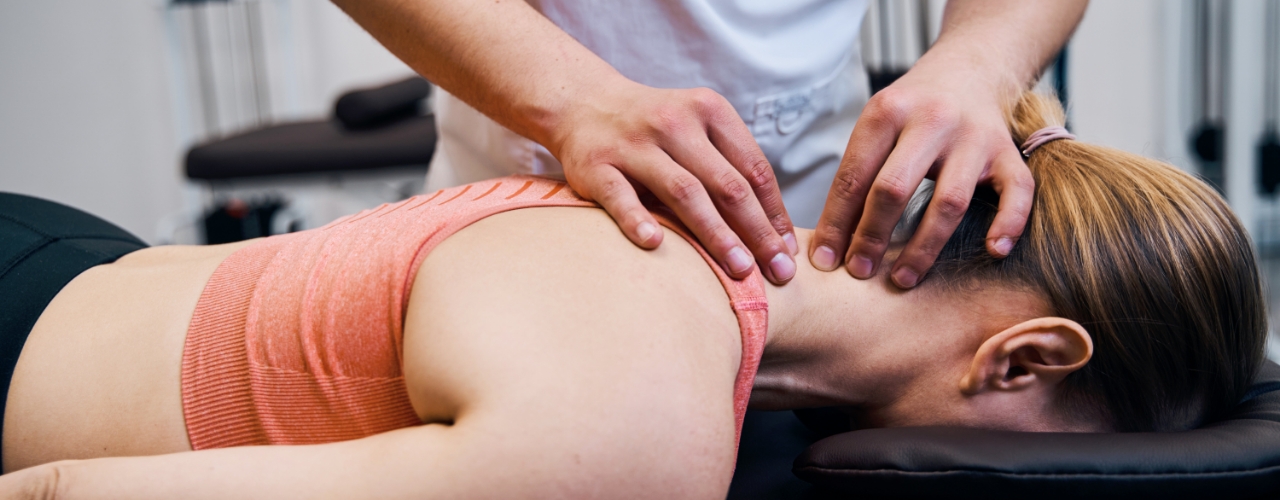
A practical example: if you spend hours each day with the head perched forward, the scalenes can tighten and the deep neck flexors get lazy. I’ll apply soft tissue release along the anterior and middle scalene lines, then flip you to a chin tuck pattern to reawaken the deep flexors immediately. That pairing matters. Release without retraining is a short vacation. Retraining without release is like trying to learn a dance while your partner stands on your feet.
I also like to address the pec minor and the upper thoracic paraspinals. When the chest wall is tight and the upper back is rigid, the neck has to contort to find your screen. Free those areas, and ergonomics starts working in your favor.
When pain management is part of the plan
Pain management isn’t only about reducing the number on a scale. It’s about creating a window where you can move well and build capacity. Heat, brief cold exposure, and gentle electrical stimulation can help in the acute phase. But the true drivers are manual therapy, progressive loading, and graded exposure to motions that used to feel threatening. Your nervous system learns safety by doing.
For whiplash or an acute flare-up, I start with smaller arcs of motion within comfort, frequently throughout the day. Recovery timelines vary. Mild postural strains can settle within 2 to 4 weeks. Whiplash cases often take 6 to 12 weeks depending on severity and whether you had early guidance. Herniated disc symptoms can improve dramatically over 6 to 8 weeks with the right strategy, though residual sensitivity sometimes lingers longer. Patience, plus a methodical plan, beats bracing and fear.
Building a home exercise plan for neck pain that sticks
The best home programs are short, clear, and repeatable. People do what fits into their physical therapy day. Two or three gentle neck stretches, a simple deep neck flexor drill, and one or two scapular stability moves create a strong base. I care less about exotic exercises and more about consistency. Done daily, for two weeks, and reassessed at each visit.
Here is a compact sequence that works well for many:
- Gentle neck stretches: Rotation holds to the right and left for 10 to 20 seconds, side bending with the opposite hand lightly anchoring the shoulder, and a chest opener where you clasp hands behind you and lift the sternum. Deep neck flexor activation: Supine chin nods, tiny and precise. Think of sliding the skull straight back on a towel, holding 5 to 8 seconds, repeating 8 to 10 times. Scapular setting: Seated or standing, lightly draw the shoulder blades down and slightly together, avoiding a shrug. Hold 5 seconds, repeat 10 times. Upper thoracic mobility: Sit tall, hug yourself, and rotate gently right and left, keeping the chin level. Five slow reps each way. Pectoral doorway stretch: Forearm on a doorframe, elbow at shoulder height, step through until you feel a stretch across the chest. Hold 20 seconds each side.
If any movement creates sharp, radiating pain, modify the range or substitute. A good plan has options and scales up gradually. For those with nerve irritation, nerve glides can help, but they should be prescribed and coached to avoid overdoing it.
Why posture alignment is misunderstood, and how to do it better
People hear posture correction and think of pulling the shoulders back until the mid-back cramps. That isn’t posture, that’s a pose. Postural correction therapy for neck pain focuses on stacking segments so the load distributes: pelvis neutral, ribs down without slumping, sternum lifted, head balanced over the shoulders. The test is whether you can breathe easily and feel relaxed. If not, the position won’t last.
Small cues work wonders. If your monitor sits low, your chin will drift forward and down. Raise the screen so your eyes hit the top third. Put the keyboard close so you’re not reaching. If you take phone calls, use earbuds so you don’t trap the phone between shoulder and ear. The best posture is the one you can change out of. I ask desk workers to rotate positions every 20 to 30 minutes: sit upright, sit reclined with lumbar support, stand for a bit, then back again. The neck appreciates variety.
Ergonomic adjustments that pay off quickly
A few tweaks beat a full office makeover. Chair height should let your feet plant, knees around 90 degrees, and hips slightly higher than knees to encourage a neutral pelvis. The top of your monitor near eye level. Keyboard and mouse close enough that elbows rest by your sides rather than reaching forward. Laptop users do best with an external keyboard and a riser, even a stack of books to lift the screen if needed.
For people who drive long distances, slide the seat close enough that you are not reaching for the wheel, and raise the seat or steering wheel so your shoulders can relax. If you wake with neck stiffness, test pillow height. Most do better with a medium pillow that fills the space between ear and shoulder when lying on the side. Too lofty or too flat pushes the cervical spine out of neutral.
What manual therapy sessions feel like over a few weeks
The first session often focuses on calming the system. We review your aggravators, make early ergonomic changes, and begin gentle manual therapy: grade II mobilizations in the stiff segments, myofascial release along the usual suspects, and a couple of easy home exercises. By the second or third visit, once the irritability settles, we progress to more specific joint mobilization, perhaps manipulation if safe and indicated, and add strengthening for the deep neck flexors and scapular stabilizers.
Progress creeps, then leaps. Patients often notice that check-turn while driving becomes smoother around week two, or that the headache frequency drops from daily to twice a week. Range of motion improves first, then endurance. The last piece is resilience, your ability to sit for a work block or practice an instrument without flaring. That comes from consistent loading and movement variety.
If symptoms plateau, I look for blind spots: jaw tension that never got addressed, a shoulder that lacks overhead mechanics, thoracic stiffness that resists rotation. Cervical spine physical therapy lives or dies by how well we treat the neighboring regions.
Special cases: whiplash, herniated disc, and desk-bound strain
Whiplash from a rear-end collision creates a different landscape. Ligaments may be sprained, muscles inhibited, and the nervous system on alert. Early gentle motion is the rule. I avoid aggressive stretching or high velocity manipulation in the acute phase. We dose movement often, in small amounts, with gradual reintroduction of strength work. Education helps prevent fear-based guarding that can prolong pain. Many recover well within 6 to 12 weeks when they move early and avoid immobilization.
A herniated disc in the cervical spine doesn’t always need surgery. If there is no progressive weakness or red flags, conservative care can calm nerve root irritation. Position of relief guides the plan. Some feel better with slight extension, others with slight flexion. Nerve glides, cervical traction, and careful loading of the shoulder and scapula reduce pressure on the neck and improve function. Be patient, and avoid repeated end-range flexion if that reproduces arm symptoms. As the nerve calms, we expand the envelope.

Desk-bound strain is the slow burn. Here, the solution is mostly behavioral. You cannot out-stretch an eight-hour slump. Micro-breaks, frequent position changes, and steady strength work for the upper back and deep neck flexors do more than a long stretch session at night. This is also where trigger point therapy shines. When we release the upper trapezius and levator, and then reinforce scapular control, the shoulder stops creeping toward the ear by default.
How strengthening prevents the relapse
Stretching feels good. Strength keeps the gains. Once pain settles, I shift focus to progressive strengthening. Start with isometrics: gentle resisted rotation, side bending, and flexion with the head in neutral. Then add endurance holds for the deep neck flexors, building to 30 to 45 seconds over time. Pair that with rowing patterns, face pulls, and Y and T raises for the mid and lower trapezius. Two or three short sessions per week, 10 to 15 minutes, outperforms sporadic long workouts.
Breathing ties it together. If you constantly shrug to breathe, the scalenes stay overworked. Practice wide rib breathing with the shoulders soft. The less accessory muscle overuse, the less muscle tension in the neck.
When to seek an orthopedic therapist, and what to ask
If pain persists beyond a few weeks despite self-care, if you experience numbness or weakness in the arm or hand, or if headaches intensify with neck movements, it’s time to schedule with an orthopedic therapist. Ask about their approach to manual manipulation and mobilization. A good clinician doesn’t sell thrusts or gadgets. They explain the rationale, screen for risk, and integrate manual therapy with exercise and education. If every patient gets the same sheet of physical therapy exercises for neck pain on day one, keep looking.
Also ask how they measure progress. Range of motion, symptom frequency, and functional goals like driving comfort or workstation tolerance beat a vague “come twice weekly forever.” You should leave each session understanding what changed and what to practice at home.
A realistic home routine that respects busy schedules
Here is a tidy, repeatable daily routine that covers most bases in under 12 minutes:
- Morning reset: Supine chin nods on a towel, 8 reps of 8-second holds. Follow with gentle rotation in hook-lying, 5 each side. Finish with a doorway pec stretch, 20 seconds each side. Midday micro-break: Sit tall, perform 6 scapular sets with slow nasal breaths, then 6 upper thoracic rotations seated. Get up for water. Evening ease-out: Gentle side bend stretch with the opposite hand anchoring the shoulder, 20 seconds each side. Self-massage with a ball against a wall to the upper trapezius for one minute total. Finish with 6 resisted isometric rotations, light band or hand resistance, pain-free effort.
It’s intentionally short. The wins come from stacking these little signals to the system, day after day.
What progress feels like, and how to keep it
Progress usually sounds like this: “I turned to merge and didn’t think about it.” “The headache that used to arrive at 3 pm now shows up once or twice a week.” “I can sit through a two-hour meeting if I change positions a couple times.” Pain eases, range of motion returns, then the background tension fades. If you stop too soon, symptoms drift back. Keep the strength pieces a couple of times per week, keep your workstation honest, and treat travel days and late nights as yellow flags that call for a lighter next day.
If you hit a setback, scale rather than stop. Shrink ranges, shorten holds, and add a little more soft tissue work for a few days, then climb back up. The neck loves steady, predictable care more than dramatic fixes.

The role of coordinated care
Not every neck case is a solo act. If symptoms radiate into the arm with weakness, get checked by a physician. If jaw clenching drives your neck pain, a dentist familiar with TMD can help. If anxiety or high stress keeps your shoulders glued to your ears, simple breathing and stress management techniques pull weight. Good cervical spine care lives at the intersection of physical load, habits, and the nervous system.
Bottom line: manual therapy as a catalyst, not the whole story
Manual manipulation and mobilization unlock motion and reduce pain right now. They are catalysts. When combined with myofascial release, trigger point therapy, and a thoughtful progression of stretching and strengthening exercises, they help reset the system. Add ergonomic adjustments and posture alignment that feels natural, and you give your neck a fair shot at staying happy. Physical therapy for neck pain works best when it blends hands-on skill with clear education and a simple home plan that you can actually follow.
If you’re sifting through searches like neck pain treatment with physical therapy or looking for neck pain and shoulder tension relief that lasts, look for a clinician who treats the person, not just the sore spot. Expect a careful evaluation, a plan that adapts, and tools you can use on your own. Your cervical spine doesn’t need perfection. It needs freedom to move, muscles that share the work, and habits that respect the load you carry each day.
Physical Therapy for Neck Pain in Arkansas
Neck pain can make everyday life difficult—from checking your phone to driving, working at a desk, or sleeping comfortably. Physical therapy offers a proven, non-invasive path to relief by addressing the root causes of pain, not just the symptoms. At Advanced Physical Therapy in Arkansas, our licensed clinicians design evidence-based treatment plans tailored to your goals, lifestyle, and activity level so you can move confidently again.
Why Physical Therapy Works for Neck Pain
Most neck pain stems from a combination of muscle tightness, joint stiffness, poor posture, and movement patterns that overload the cervical spine. A focused physical therapy plan blends manual therapy to restore mobility with corrective exercise to build strength and improve posture. This comprehensive approach reduces inflammation, restores range of motion, and helps prevent flare-ups by teaching your body to move more efficiently.
What to Expect at Advanced Physical Therapy
- Thorough Evaluation: We assess posture, joint mobility, muscle balance, and movement habits to pinpoint the true drivers of your pain.
- Targeted Manual Therapy: Gentle joint mobilizations, myofascial release, and soft-tissue techniques ease stiffness and reduce tension.
- Personalized Exercise Plan: Progressive strengthening and mobility drills for the neck, shoulders, and upper back support long-term results.
- Ergonomic & Lifestyle Coaching: Practical desk, sleep, and daily-activity tips minimize strain and protect your progress.
- Measurable Progress: Clear milestones and home programming keep you on track between visits.
Why Choose Advanced Physical Therapy in Arkansas
You deserve convenient, high-quality care. Advanced Physical Therapy offers multiple locations across Arkansas to make scheduling simple and consistent—no long commutes or waitlists. Our clinics use modern equipment, one-on-one guidance, and outcomes-driven protocols so you see and feel meaningful improvements quickly. Whether your neck pain began after an injury, long hours at a computer, or has built up over time, our team meets you where you are and guides you to where you want to be.
Start Your Recovery Today
Don’t let neck pain limit your work, sleep, or workouts. Schedule an evaluation at the Advanced Physical Therapy location nearest you, and take the first step toward lasting relief and better movement. With accessible clinics across Arkansas, flexible appointments, and individualized care, we’re ready to help you feel your best—one session at a time.
Advanced Physical Therapy
1206 N Walton Blvd STE 4, Bentonville, AR 72712, United States 479-268-5757
Advanced Physical Therapy
2100 W Hudson Rd #3, Rogers, AR 72756, United States
479-340-1100